
Side Dishes
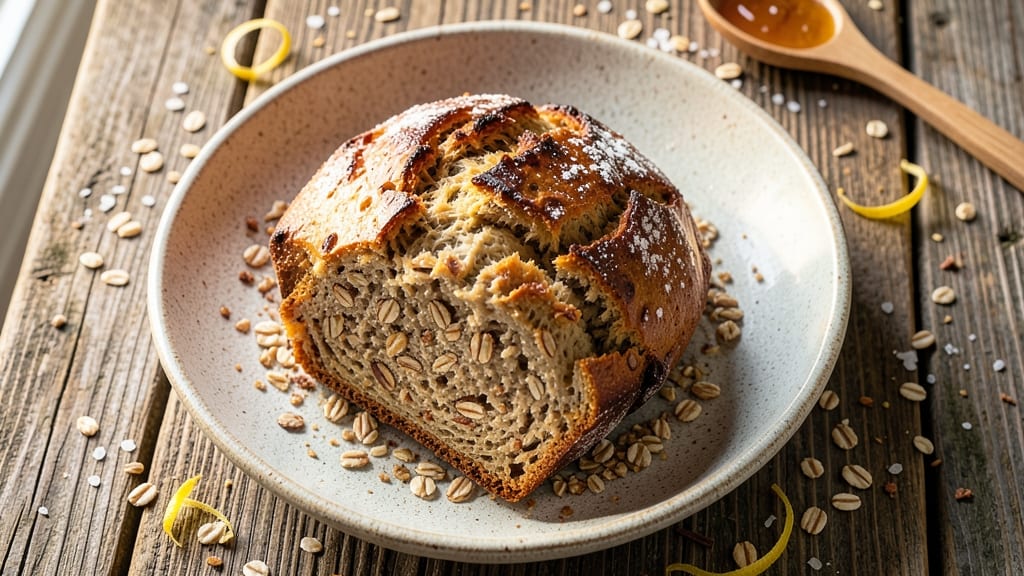
This artisan oatmeal bread recipe delivers a golden crust with nutty sweetness inside—perfect for sandwiches, toast, or serving alongside soups. The oats create a tender crumb while adding subtle earthy flavor, and the dough develops beautifully with proper kneading and proofing.
I’ve refined this recipe over years of baking, ensuring it’s foolproof for home bakers of all skill levels.
The secret lies in the balance of hydration and oat texture—too much moisture makes the bread gummy, while too little results in a dense loaf. This version uses steel-cut oats for chewiness and a touch of honey to enhance the bread’s natural sweetness.
The dough rises twice for maximum flavor development, and baking at high heat creates that coveted crispy crust.
What you’ll end up with is a rustic, hearty loaf that’s aromatic, slightly sweet, and packed with texture—crispy on the outside, soft and nutty within. The oats add a satisfying bite, while the golden crust holds up perfectly for slicing.
Whether you’re a beginner or an experienced baker, this recipe delivers professional-quality results with minimal effort.
Optional add-ins like flaxseeds or sunflower seeds boost nutrition and texture, while a sprinkle of coarse salt on top enhances the crust’s depth. Store leftovers wrapped in a cloth to keep them fresh for days. Ready to bake?
Ingredients for artisan oatmeal bread
Pantry staples meet rustic tradition in this artisan oatmeal bread with golden crust and nutty sweetness.
| Ingredient | Amount | Notes |
|---|---|---|
| Steel-Cut Oats 🌾 | 1 ½ cups | Uncooked, for texture and chewiness |
| All-Purpose Flour 🌾 | 4 cups | Bread flour preferred for structure |
| Active Dry Yeast 🍞 | 2 ¼ tsp | Fresh yeast works too, adjust slightly |
| Granulated Sugar 🍚 | ¼ cup | For yeast activation and sweetness |
| Honey 🍯 | ¼ cup | Enhances oat flavor, don't substitute maple |
| Unsalted Butter 🧈 | ½ cup | Cold, cubed for proper dough development |
| Whole Milk 🥛 | 1 ¼ cups | Warmed to 110°F for optimal yeast activity |
| Large Eggs 🥚 | 1 whole | Room temperature for even mixing |
| Diamond Crystal Kosher Salt 🧂 | 1 ½ tsp | Fine grain for even distribution |
| Coarse Sea Salt 🧂 | 1 tsp | For final crust sprinkle |
| Cornmeal 🌽 | ¼ cup | For dusting loaf pan |
| Flaxseeds (Optional) 🌱 | ¼ cup | For added nutrition and texture |
| Sunflower Seeds (Optional) 🌻 | ¼ cup | For crunch and visual appeal |
The oats are the heart of this bread—steel-cut oats provide that signature chewiness, while brown rice flour at Whole Foods or King Arthur Flour adds depth. For yeast, Fresh & Easy or Bob's Red Mill brands perform best. The butter should be cold when mixed into the dough; Plugrá or Land O'Lakes work well. Honey is non-negotiable here—local raw honey from farmers markets enhances the bread's natural sweetness without overpowering the oat flavor. If you can't find steel-cut oats, old-fashioned rolled oats work in a pinch, but the texture will be slightly softer.
No steel-cut oats? Old-fashioned rolled oats are your best substitute, though the texture will be less chewy. Bread flour can be swapped for all-purpose, but expect a slightly denser crumb. For honey alternatives, agave nectar works in a 1:1 ratio, though it lacks the floral notes. The optional seeds—flaxseeds and sunflower seeds—can be omitted entirely if you prefer a cleaner loaf. If you're short on time, instant yeast can replace active dry yeast at half the quantity. The dough should be tacky but not sticky; if it's too dry, add 1 tablespoon of milk at a time until it reaches the ideal consistency.
Freshly baked loaves cool on a wire rack for 2 hours before slicing to prevent a gummy interior. Store wrapped in a clean kitchen towel for 3-4 days at room temperature, or freeze for up to 3 months by wrapping tightly in plastic. To revive stale bread, sprinkle with water and toast until crispy. The crust develops best when baked in a preheated Dutch oven—if you don't have one, use a heavy oven-safe skillet. For extra crispiness, brush the crust with melted butter after baking and let it cool completely.
Why You'll Love This Recipe
- No-Knead Magic: I swear by this recipe—just mix, let it rise overnight, and bake. The steel-cut oats do all the work while you sleep, giving you a rustic loaf with zero effort.
- Honeyed Crunch: That caramelized honey and chewy oat texture? It’s like biting into a dessert and a sandwich at once. The sugar keeps it moist, but the oats add a satisfying bite.
- Weeknight Hero: Toss a slice in the toaster for breakfast or pack it with lunch—it’s my go-to when I’m too tired to think. Honestly, it’s the only bread I make anymore.
- Budget Loaf: A single batch costs pennies but feels like artisanal bakery bread. The yeast stretches the dough perfectly, and those steel-cut oats add heartiness without breaking the bank.
Step-by-step instructions for artisan oatmeal bread
Transform simple ingredients into a rustic loaf with a crisp golden crust and tender nutty interior.
Prepare the Oatmeal Base
Toast the 1.5 cups Steel-Cut Oats in a dry skillet over medium heat for 5-7 minutes, stirring constantly, until they develop a deep golden color and nutty aroma. This step enhances their flavor and prevents a raw taste in your bread. Transfer the toasted oats to a bowl and let them cool completely before using.
While the oats toast, combine the 2.25 tsp Active Dry Yeast, 0.25 cup Granulated Sugar, and 0.25 cup Honey in a small bowl with ½ cup of the 1.25 cups Whole Milk (warmed to 110°F). Let this mixture sit for 5-10 minutes until it becomes frothy—this confirms the yeast is active. If it doesn't foam, your yeast may be inactive, and you'll need to start over.
Mix the Dough Components
In a large mixing bowl, whisk together the 4 cups All-Purpose Flour and 1.5 tsp Diamond Crystal Kosher Salt. Create a well in the center and add the yeast mixture, 0.5 cup Unsalted Butter (cut into small cubes), 1 whole Large Eggs, and the remaining ½ cup of warmed milk. Mix with a wooden spoon until a shaggy dough forms.
Gradually incorporate the toasted oats, 0.25 cup Cornmeal, and the optional 0.25 cup Flaxseeds and 0.25 cup Sunflower Seeds (if using). The dough will be sticky but should come together when pressed. If it's too dry, add 1 tablespoon of milk at a time until it reaches a soft, slightly tacky consistency. Avoid overmixing—just combine until no dry flour remains.
Knead and Rest the Dough
Turn the dough onto a lightly floured surface and knead for 8-10 minutes by hand, or use a stand mixer with a dough hook on medium speed for 5-6 minutes. The dough should become smooth and elastic, pulling away from the sides of the bowl when tested. If it's too sticky, add 1 tablespoon of flour at a time; if too dry, add 1 teaspoon of milk.
Place the dough in a lightly greased bowl, cover with a damp towel, and let it rise in a warm place (75-80°F) for 1-1.5 hours, or until it has doubled in size. Poke the dough gently—if it springs back slowly, it's ready. For best results, perform this rise in a slightly warm oven with the light on, or use a proofing box. Avoid cold drafts, which slow fermentation.
Shape and Final Proof
Punch down the risen dough to release air, then shape it into a 9x5-inch loaf pan by folding the edges toward the center and pressing gently to fill the pan completely. Brush the top with a little milk and sprinkle evenly with 1 tsp Coarse Sea Salt for texture and flavor. Cover loosely with plastic wrap and let it rise again for 30-45 minutes until it domes slightly above the pan.
Preheat your oven to 375°F with a baking stone or inverted baking sheet on the lower rack. This creates steam, which is crucial for a crisp crust. Bake the bread for 35-40 minutes, rotating the pan halfway through, until the top is deep golden brown and an instant-read thermometer inserted into the center reads 190-195°F. The internal temperature is the most reliable indicator—overbaking dries out the bread.
Cool and Serve
Remove the bread from the oven and transfer it to a wire rack to cool completely for at least 1 hour. This step is critical—cutting into warm bread releases steam and makes it gummy. For the best texture, let it cool until it's just slightly warm to the touch before slicing.
The finished loaf should have a crisp, caramelized crust with a tender, slightly dense crumb speckled with chewy oat pieces. Store wrapped at room temperature for 2-3 days or freeze for up to 3 months. Toast slices lightly for the ultimate texture contrast—crunchy exterior, soft interior, and that signature nutty sweetness.
Pro Tips For Making Artisan Oatmeal Bread
- SOAK THE OATS FIRST: Steel-cut oats are stubborn—just tossing them into the dough won’t cut it. Soak them in warm water or honey for 10-15 minutes before mixing; this softens them enough to blend into the dough smoothly and prevents that gritty texture in every bite.
- WEIGH THE FLOUR: Scooping flour from the bag is a recipe for disaster. Use a scale—this bread relies on precise ratios, and too much flour makes it dense. Even a 10-gram swing changes the crumb. (Yes, I’ve learned this the hard way.)
- LET THE DOUGH RISE TWICE: The first rise is obvious, but the second—after shaping—is where the magic happens. Skip it, and your bread will be flat and heavy. Give it 1-2 hours in a warm spot, or until it’s puffed and jiggly. (Your patience will pay off.)
- USE HONEY LAST: Add honey to the dough after mixing the wet and dry ingredients—it’s sticky, and mixing it in early makes the dough gummy and hard to handle. A quick drizzle at the end keeps the texture light and the flavor bright. (Trust me, this is the easy fix.)
Best sauces and condiments for this dish
Butter Slather
Nothing enhances oatmeal bread's rustic charm like a generous spread of cultured butter—I reach for Plugrá European-Style for its rich, slightly tangy flavor. Brush 2 tablespoons of softened butter over warm slices to melt into the crust, or spread 1 tablespoon per serving on toasted bread.
For extra decadence, mix in 1 teaspoon honey and a pinch of flaky sea salt before serving. 🧈
Honey-Dijon Glaze
This sweet-tangy glaze elevates every bite by balancing the bread's nutty notes. Whisk together 3 tablespoons honey, 1 tablespoon Dijon mustard, and 1 teaspoon lemon juice, then warm gently in a small saucepan. Brush onto warm bread slices or drizzle over a tomato and mozzarella sandwich.
The mustard adds depth that cuts through the richness of butter. For a vegan twist, use olive oil instead of butter in the glaze.
Whipped Herb Cream
A light, airy spread made with ½ cup whipped cream cheese, 2 tablespoons sour cream, 1 tablespoon chopped fresh dill, and ½ teaspoon lemon zest adds brightness to sandwiches. Fold in 1 tablespoon toasted oats for texture that mirrors the bread's flavor.
This works beautifully with smoked salmon or avocado on toasted oatmeal bread. Store in an airtight container for up to 3 days in the fridge.
Spiced Nut Butter
Blend 1 cup roasted peanuts or almonds, 2 tablespoons tahini, 1 tablespoon maple syrup, ½ teaspoon cinnamon, and a pinch of cayenne for a spread with texture and warmth.
This pairs perfectly with banana slices or apple compote on toast. For extra crunch, sprinkle with crushed peanuts before serving. Keep refrigerated in a glass jar for up to 2 weeks.
Garlic-Herb Oil
Infuse ½ cup olive oil with 4 minced garlic cloves, 1 tablespoon fresh rosemary, and 1 teaspoon flaky salt by simmering gently for 5 minutes. Strain and drizzle over warm bread slices or use as a dip for crusty chunks.
The aromatic oil enhances the bread's natural flavors without overpowering them. Store in a dark glass bottle in the fridge for up to 1 month.
Nutrition facts
Frequently asked questions
Why do you toast the oats before using them?
Toasting the oats enhances their nutty flavor and prevents a raw, grainy taste in your bread. The 5-7 minute toasting time in a dry skillet develops deep caramelized notes that make the bread taste richer. Plus, it helps the oats absorb moisture better during mixing, creating a more cohesive dough.
Can I substitute steel-cut oats for rolled oats?
Yes, but the texture will differ slightly. Rolled oats will create a softer, more tender crumb while steel-cut oats give that signature chewy bite. If using rolled oats, toast them for 3-4 minutes instead to avoid burning. For best results, stick with steel-cut for that authentic artisan texture.
How do I know when the dough is ready for the second rise?
Look for two key signs: the dough should dome slightly above the loaf pan, and when you gently press it, the indentation should spring back slowly (not immediately). This usually takes 30-45 minutes at room temperature. A warm oven with the light on creates the perfect environment for this final proof.
Why does my oatmeal bread turn out dense?
Common causes include overmixing the dough, underproofing, or opening the oven too early. The dough should be slightly tacky but not sticky when mixed, and the second rise is crucial—don't rush it. Also ensure your oven is properly preheated with a baking stone for that steam that creates an open crumb.
Can I make this bread without a stand mixer?
This recipe is designed to be mixer-free. Knead by hand for 8-10 minutes on a lightly floured surface until the dough becomes smooth and elastic. The key is consistent pressure—press, fold, and turn the dough repeatedly. Your arms will thank you after the first loaf!