
Side Dishes
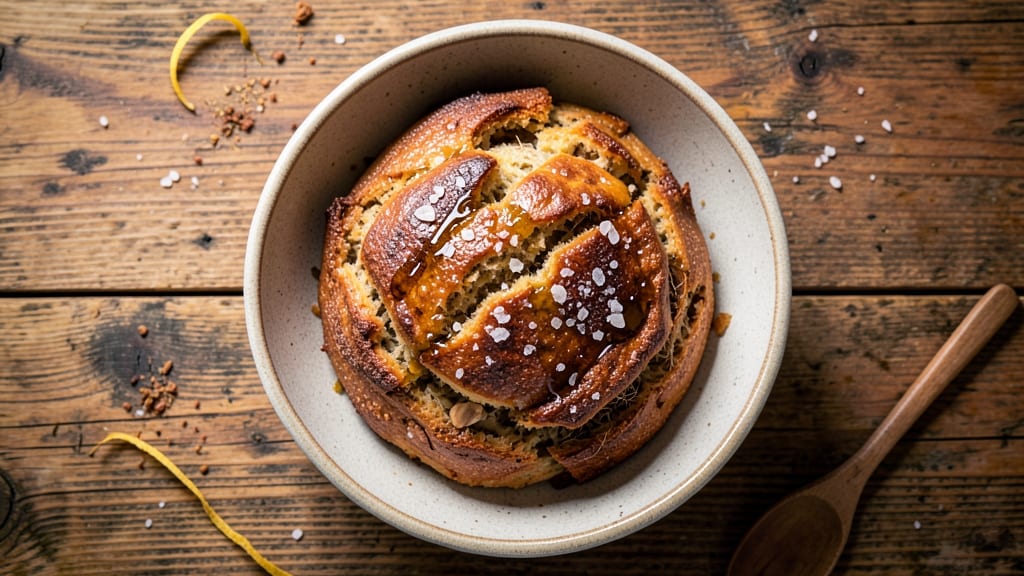
This almond pulp bread recipe delivers a revelation for texture lovers—dense yet tender, nutty yet subtly sweet, with a golden crust that begs to be broken. The secret lies in almond pulp's natural moisture retention, which replaces traditional flour while keeping every slice irresistibly soft.
After years of experimenting with hydration ratios, I've perfected a method that yields bread with a satisfying crumb and rich almond flavor without requiring special equipment.
The process begins with a wet/dry mix that develops gluten-like structure through almond pulp's natural binding properties. An optional autolyse rest (10-15 minutes) ensures maximum hydration and a lighter crumb, though this bread works beautifully even without it.
Baking at 350°F for 30-35 minutes produces that coveted golden crust while keeping the interior moist—no steam pan required.
What makes this recipe truly special is its versatility. Serve slices toasted with avocado for breakfast or paired with soups for dinner, or transform it into French toast that's richer than traditional versions.
The nutty depth satisfies without overpowering, making it a crowd-pleaser for both almond enthusiasts and skeptics alike.
Perfect for meal prep or gifting, this bread keeps well for 3-4 days at room temperature or frozen for up to 3 months. The technique is foolproof—ideal for beginners yet impressive enough for experienced bakers. Let's create something extraordinary from pantry staples and almond pulp.
Ingredients for almond pulp bread
Eight ingredients transform almond pulp into golden-crusted, moist bread with nutty richness.
| Ingredient | Amount | Notes |
|---|---|---|
| Almond Pulp 🌰 | 2 ½ cups | Unsweetened, finely ground |
| Water 💧 | 1 ½ cups | Room temperature preferred |
| Extra-Virgin Olive Oil 🫒 | ¼ cup | High-quality, fruity variety |
| Psyllium Husk Powder 🌾 | 1 ½ tbsp | For gluten-like structure |
| Baking Soda 🧂 | ½ tsp | Pure, aluminum-free |
| Salt 🧂 | ½ tsp | Fine sea salt preferred |
| Maple Syrup 🍯 | 2 tbsp | Grade B for depth of flavor |
| Apple Cider Vinegar 🍏 | 1 tbsp | For acidity balance |
| Flaxseeds 🌿 | 1 tbsp | Ground into meal |
| Sesame Seeds 🌰 | 1 tbsp | For crust decoration |
| Nutritional Yeast 🧀 | 1 tbsp | For cheesy depth |
| Almond Milk 🥛 | ¼ cup | Unsweetened, for wet mix |
Almond pulp is the star—Bob's Red Mill or Anthony's Goods brands yield the finest texture. Look for unsweetened varieties with minimal additives, as these deliver the cleanest almond flavor. The psyllium husk powder (Now Foods is reliable) creates that essential gluten-like structure, so don't skip it. For the olive oil, California-based brands like Corto offer superior fruity notes that elevate the bread's complexity. Store almond pulp in an airtight container in your pantry—it keeps for up to 12 months once opened, though freshness fades after about 6 months.
No psyllium husk? Chia seeds at double the amount work in a pinch, though texture will differ slightly. Substitute maple syrup with agave nectar if preferred, though maple adds that subtle caramel depth. The apple cider vinegar can be swapped for lemon juice at equal measure, but vinegar's tang is ideal for balancing sweetness. For sesame seeds, white or black varieties both work—black adds visual contrast. The flaxseeds must be ground fresh for maximum binding power; pre-ground loses effectiveness after 2 weeks. Nutritional yeast (Bragg brand is widely available) adds that umami richness—don't omit it if you want that restaurant-quality depth.
This bread develops best with a 10-15 minute autolyse rest before shaping, though it works without. Shape into a round loaf for even baking or a rectangular pan for sandwich slices. The crust achieves perfect golden-brown perfection at 350°F for 30-35 minutes—no steam pan required. Cool completely on a wire rack before slicing to prevent gumminess. Wrapped in parchment, it keeps at room temperature for 3-4 days or frozen for 3 months. For French toast, slice thickly and soak in almond milk mixed with cinnamon—absolutely essential for that restaurant-style richness.
Why You'll Love This Recipe
- No-Fuss Mixing: I swear by this dough—just stir, rest, bake. The psyllium husk does all the heavy lifting, so no kneading, no fuss. Honestly, I’ve made it while scrolling through emails.
- Nutty Depth: That almond pulp? It’s like a warm hug in every bite—naturally sweet, rich, but not overpowering. The olive oil keeps it moist without tasting heavy, and the baking soda gives it just enough lift.
- Meal Prep MVP: Slices perfectly for toast, sandwiches, or even French toast. I bake a loaf on Sundays and it lasts me all week—no sad, stale bread here.
- Budget Bright Spot: Uses pantry staples and almond pulp (often free or cheap from almond milk makers). Between us, it’s cheaper than store-bought and way more satisfying.
Step-by-step instructions for almond pulp bread
Master this nutty, moist loaf with a golden crust using precise technique and patience.
Combine Wet Ingredients for Optimal Hydration
In a large mixing bowl, whisk together the 1.5 cups water and 2 tbsp maple syrup until fully combined. The syrup will dissolve completely, creating a smooth base. Add the 0.25 cup extra-virgin olive oil and mix vigorously for 30 seconds—this emulsifies the oil and creates a stable foundation for the batter.
Next, incorporate the 1 tbsp apple cider vinegar and 1 tbsp flaxseeds (pre-ground into meal). The vinegar will react with the flaxseeds to create a natural thickening agent, while also balancing the sweetness. Stir in the 1 tbsp nutritional yeast and 0.5 tsp baking soda, whisking until everything is fully dissolved. The mixture should be uniform with no visible lumps.
Incorporate Dry Ingredients for Structure and Flavor
In a separate bowl, sift together the 2.5 cups almond pulp and 1.5 tbsp psyllium husk powder. The psyllium acts as a gluten substitute, providing the bread with its signature structure. Gradually add this dry mixture to the wet ingredients while whisking continuously. This prevents clumping and ensures even distribution of the psyllium throughout the batter.
Add the 0.5 tsp salt and mix until fully incorporated. The salt enhances the nutty flavor of the almond pulp while balancing the sweetness from the maple syrup. Finally, pour in the 0.25 cup almond milk and stir until the batter reaches a thick, pourable consistency—similar to pancake batter. The batter should coat the back of a spoon but still flow freely when poured.
Prepare the Loaf Pan for Perfect Rise
Preheat your oven to 350°F and lightly grease an 8x4-inch loaf pan with a small amount of olive oil. Line the bottom with parchment paper, leaving an overhang on both sides for easy removal later. Pour the batter into the prepared pan, smoothing the top with a spatula. The batter should fill the pan to about ¾ full—it will rise significantly during baking.
Sprinkle the 1 tbsp sesame seeds evenly over the top of the batter. These seeds will create a decorative crust while adding a subtle nutty crunch. Tap the pan gently on the counter to eliminate any air bubbles that may have formed on the surface. Place the pan on a baking sheet to catch any potential overflow during the rise.
Bake to Golden Perfection with Moisture Retention
Bake the loaf for 50-55 minutes until the top is deep golden brown and a toothpick inserted into the center comes out clean. The bread is done when it springs back slightly when pressed gently in the center—this indicates proper moisture retention. If the top browns too quickly, tent the pan loosely with aluminum foil after 30 minutes to prevent over-browning while allowing steam to escape.
During the final 10 minutes of baking, the bread should develop a crisp crust while maintaining a tender, moist crumb. The psyllium husk powder and almond pulp work together to create a light yet dense texture. Remove the bread from the oven and let it cool in the pan for 10 minutes before transferring to a wire rack to cool completely. This resting period allows the internal structure to set, preventing a gummy texture.
Serve with Confidence in Texture and Flavor
Once fully cooled, slice the bread into ½-inch thick pieces using a serrated knife. Each slice should reveal a uniform crumb with a slight nutty aroma from the almond pulp. The interior should be moist but not wet, with a subtle sweetness from the maple syrup and a hint of tang from the apple cider vinegar. The crust should be golden and crisp, providing contrast to the tender crumb.
For best results, store the bread in an airtight container at room temperature for up to 3 days or refrigerate for up to 5 days. To revive stale bread, wrap a slice in foil and warm it in a 350°F oven for 5-7 minutes until heated through. This bread pairs beautifully with soups, spreads, or simply enjoyed on its own with a smear of almond butter.
Pro Tips For Making Almond Pulp Bread
- STIR VIGOROUSLY AFTER MIXING: The psyllium husk powder and baking soda need to fully dissolve into the water first—otherwise, you’ll end up with dry pockets in your bread. After adding the dry ingredients to the liquid, grab a whisk and stir like you’re trying to win a bet. I learned this the hard way when my first batch turned out like a dense, crumbly brick.
- WEIGH YOUR ALMOND PULP: Almond pulp is deceptive—what looks like a "handful" can vary wildly. Use a kitchen scale for accuracy; aim for about 150–180g for a standard loaf. I used to eyeball it, and my bread would either turn out too dry or gummy. Trust the scale—your future self will thank you.
- LET THE BATTER REST 10 MINUTES: Psyllium husk expands when hydrated, and rushing this step means your bread won’t rise properly. After mixing, let the batter sit untouched for at least 10 minutes—it’ll thicken noticeably. I skipped this once and ended up with a sad, flat loaf that looked more like a pancake.
- USE COLD WATER FOR OIL: Cold water helps the olive oil emulsify better with the almond pulp, preventing a greasy texture. If your kitchen’s warm, chill the water slightly first—this makes a real difference in how smoothly the dough comes together. I was skeptical until I tried it; now I never skip it.
Common mistakes when making great almond pulp bread
Overmixing the Batter
I've made this mistake more times than I'd admit—overmixing the batter creates a dense, rubbery texture instead of the light, moist crumb we want. Once you've incorporated all the dry ingredients into the wet mix, stop stirring immediately after achieving a smooth, pourable consistency.
Overworking the psyllium husk powder and almond pulp breaks down their natural binding properties, leading to a gummy final product. Aim for a batter that coats the back of a spoon but still flows freely when poured. 💛
Skipping the Autolyse Rest
While this bread works without an autolyse, skipping the 10-15 minute rest before shaping can result in uneven texture and density. The autolyse allows the almond pulp to fully hydrate, creating a more uniform crumb structure.
If you're short on time, at least let the batter sit for 5 minutes before transferring to the pan—this small adjustment makes a noticeable difference in the final texture.
Incorrect Psyllium Measurement
The psyllium husk powder is the secret to this bread's structure, so measuring it accurately is critical. Using too little results in a crumbly loaf that falls apart, while too much creates a dense, cake-like texture.
I recommend using a scale for precision—1.5 tbsp equals approximately 10 grams. If you don't have a scale, spoon the psyllium directly from the container into your measuring spoon and level it off with a knife.
Never scoop it out with the spoon itself, as this compresses the powder and gives inaccurate measurements.
Underbaking or Overbaking
Baking this bread to perfection requires careful attention to time and visual cues. Underbaking leaves the center gummy and unappetizing, while overbaking creates a dry, crumbly loaf. The bread is done when it reaches an internal temperature of 205-210°F and springs back slightly when pressed gently in the center.
I recommend checking with a toothpick at 45 minutes—if it comes out clean, your bread is ready. If not, bake for 5 more minutes before testing again. 🌡️
Using Old or Improperly Stored Ingredients
Fresh ingredients make all the difference in this recipe. Almond pulp loses its moisture-retaining properties after about 6 months of storage, leading to a dry, crumbly bread. Always check your almond pulp's freshness date and store it in an airtight container in a cool, dark place.
Similarly, ground flaxseeds lose their binding power after 2 weeks—grind them fresh for maximum effectiveness. Using expired baking soda or psyllium husk powder can also affect the bread's rise and texture, so keep these in sealed containers as well.
Ignoring the Cooling Process
Rushing to slice the bread immediately after baking is a common mistake that leads to a gummy interior. The bread needs time to set properly, which happens during the 10-minute cooling in the pan followed by complete cooling on a wire rack.
This resting period allows the internal structure to firm up and the moisture to distribute evenly. If you're impatient, at least wait 30 minutes before slicing—your patience will be rewarded with perfect slices every time.
Nutrition facts
Frequently asked questions
What makes almond pulp bread different from regular bread?
This bread uses almond pulp as its base instead of traditional flour, creating a naturally nutty, moist texture with a golden crust. The psyllium husk powder mimics gluten structure, while almond milk and olive oil enhance richness. Unlike regular bread, it's naturally vegan, gluten-free, and packed with healthy fats and fiber.
Can I substitute almond pulp with almond flour?
No, they're not interchangeable. Almond pulp is the byproduct of almond milk production, with higher moisture content that creates a denser, more tender crumb. Almond flour (ground whole almonds) is drier and would make the bread too crumbly. If you can't find almond pulp, try soy pulp or coconut pulp for similar results.
Why does my almond pulp bread taste bitter?
Bitterness usually comes from old almond pulp (older than 6 months) or using too much baking soda. Always check freshness dates and measure baking soda precisely (½ tsp). For extra flavor balance, add 1 tsp vanilla extract or ½ tsp cinnamon to the wet ingredients. The nutritional yeast also adds umami depth that can mask bitterness.
How can I make this bread sweeter or less sweet?
For a sweeter loaf, increase maple syrup to 3 tbsp or add 1 tbsp date syrup. To reduce sweetness, cut syrup to 1 tbsp and add ½ tsp lemon zest for brightness. The sesame seeds on top also add subtle sweetness. Adjust in ½ tbsp increments to avoid overpowering the nutty flavor.
Can I make this bread in a different shape?
Transfer the batter to a round cake pan for a boulesque shape or a 9x9-inch square pan for even slices. For a freeform loaf, shape the batter on a parchment-lined tray and bake at 325°F for 40-45 minutes. The baking time may vary slightly, so check with a toothpick. The texture remains the same regardless of shape!