
Side Dishes
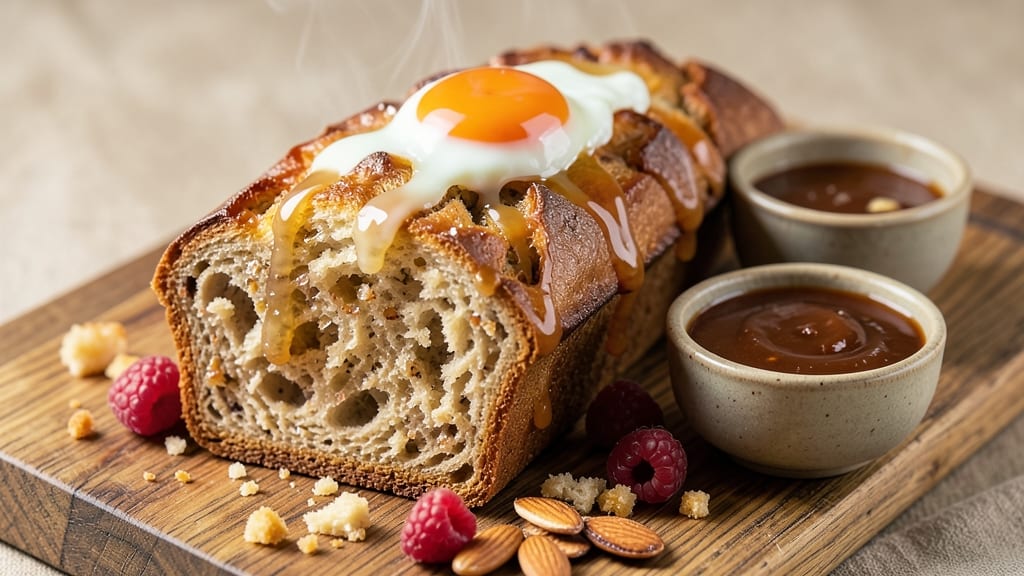
This ambrosia bread recipe delivers the perfect balance of crispy golden crust and tender vanilla-custard swirls—just like the traditional Greek loaf that brings warmth to any table. 🌟 The secret lies in layering a rich custard filling between flaky dough layers, creating a texture that's both comforting and impressive.
With its Mediterranean roots and buttery aroma, this bread is ideal for breakfast, brunch, or as a sweet accompaniment to coffee.
The recipe begins with a simple yeast dough that's rolled out and layered with a velvety vanilla custard made from eggs, sugar, and milk. After proofing, the bread bakes to a crispy top while staying soft inside, with the custard swirls peeking through in golden pockets.
The addition of citrus zest and nuts adds depth, making each bite feel special without being overly sweet.
What makes this recipe stand out is its versatility—use honey instead of sugar for a floral note, or add candied fruit for extra texture. Perfect for holidays or special occasions, it's also simple enough for weeknight baking.
The result? A loaf that's as beautiful as it is delicious, with every slice offering a perfect blend of crispy, custardy, and buttery layers.
Serve warm with a dusting of powdered sugar or alongside a cup of Greek coffee for the full experience. This ambrosia bread isn't just a recipe—it's a taste of tradition, elevated for your kitchen. Let's get baking!
Ingredients for ambrosia bread
These simple yet transformative ingredients create the perfect balance of crispy crust and custardy swirls.
| Ingredient | Amount | Notes |
|---|---|---|
| All-Purpose Flour 🌾 | 4 cups | Sifted for light texture |
| Granulated Sugar 🍚 | ½ cup | White or light brown |
| Active Dry Yeast 🍞 | 2 ¼ tsp | Freshly opened for best rise |
| Warm Whole Milk 🥛 | 1 ¼ cups | 110°F for yeast activation |
| Unsalted Butter 🧈 | ½ cup | Cold, cubed for flaky layers |
| Large Eggs 🥚 | 2 whole | Room temperature |
| Vanilla Extract 🌿 | 1 tbsp | Pure extract preferred |
| Powdered Sugar 🍚 | ¼ cup | For final dusting |
| Lemon Zest 🍋 | 1 tbsp | Freshly grated |
| Chopped Walnuts 🥜 | ½ cup | Toasted for extra flavor |
| Salt 🧂 | 1 tsp | Kosher or sea salt |
| Ground Cinnamon 🌶️ | ½ tsp | Optional for warmth |
The flour is your foundation—look for King Arthur or Gold Medal for that perfect rise. Yeast is non-negotiable here; if it's past its expiration, toss it. Wegmans or Whole Foods usually have fresh yeast packets. Warm the milk to 110°F—too hot and you kill the yeast, too cold and it won't activate. Butter should be cold when you cube it—this creates those flaky layers. I always grab Land O'Lakes or Plugrá for the best texture. The walnuts? Trader Joe's has pre-chopped ones for convenience, but toasting them yourself makes all the difference.
No vanilla extract? Almond extract at half the amount works in a pinch, but the flavor won't be identical. Short on powdered sugar? Granulated sugar works too—just sprinkle it lightly. The lemon zest can be swapped for orange zest if you're feeling citrusy. For a nut-free version, dried cranberries or raisins add sweetness instead. If your dough feels too sticky, add 1 tbsp more flour—but don't overdo it, or the bread gets dense. The cinnamon is optional, but trust me, it adds a cozy warmth that pairs perfectly with the custard.
Store leftovers in an airtight container at room temperature for 2-3 days—it reheats beautifully in the oven. For longer storage, wrap tightly in foil and freeze for up to 3 months. The best part? This bread tastes even better the next day as the custard sets. I always make a double batch—one for breakfast, one to gift. Dust with powdered sugar right before serving, or add a drizzle of honey for extra sweetness.
Why You'll Love This Recipe
- No-Knead Magic: I swear, the only "work" here is mixing—no punching, no rolling, no stress. Just toss in the flour, yeast, and warm milk, let it rise while you sip coffee, and boom. Effortless dough that still delivers.
- Sweet Butter Bliss: That rich butter and sugar combo? It’s like a hug for your taste buds. The crust gets just golden enough to shatter, while the inside stays soft—perfect for slathering with jam or buttering straight from the pan. (Yes, I’ve done both.)
- Breakfast or Snack Star: Honestly, this bread works everywhere. Toast it for breakfast, tear it for lunch, or serve it warm with soup. Freeze half the batch—those slices reheat like they’re fresh, making it my go-to for lazy mornings or unexpected company.
- Pantry Staple Power: Between us, this recipe uses things you already own. No weird ingredients, no last-minute grocery runs. And since it keeps well for days (or freezes beautifully), you’re never scrambling for bread again. My wallet thanks me.
Step-by-step instructions for ambrosia bread with vanilla-custard swirls
This method delivers that signature crispy top and dreamy custard swirls every time.
👨🍳 Step 1: Activate the Yeast and Prepare the Dough
In a large bowl, whisk together the 1.25 cups warm whole milk (it should feel warm to your wrist, not hot), 0.5 cup granulated sugar, and 2.25 tsp active dry yeast. Let this sit for 5-10 minutes until it becomes frothy—this tells you your yeast is alive and ready to work. If it doesn't bubble, start over with fresh yeast.
Add the 4 cups all-purpose flour (sifted for that light, airy texture), 1 tsp salt, and 0.5 tsp ground cinnamon to the bowl. Stir with a wooden spoon until a shaggy dough forms. Then add the 2 whole large eggs and 1 tbsp vanilla extract, mixing until everything comes together into a smooth, elastic dough. Here's the thing—this dough should be slightly sticky but not wet. If it feels too dry, add a splash of warm milk.
🍳 Step 2: Knead and Rest for Maximum Flavor Development
Turn the dough onto a lightly floured surface and knead for 8-10 minutes until it's smooth and springs back when pressed. I like to use a bench scraper to cut and fold the dough during kneading—it helps develop gluten without overworking it. Once kneaded, shape the dough into a ball, place it in a lightly greased bowl, cover with a damp towel, and let it rise in a warm spot for 1-1.5 hours or until it doubles in size.
While the dough rises, make the custard filling by melting the 0.5 cup unsalted butter in a small saucepan over low heat. Remove from heat and whisk in 0.25 cup powdered sugar, 1 tbsp lemon zest, and 0.5 cup chopped walnuts. Let this mixture cool completely before using—it needs to be thick enough to swirl but not so hot it kills the yeast in the dough.
🥘 Step 3: Shape the Dough and Add the Custard Swirls
Once the dough has risen, punch it down to release air, then divide it into two equal pieces. Roll each piece into a 12x16-inch rectangle on a floured surface. Spread the cooled custard mixture evenly over one of the rectangles, leaving a ½-inch border around the edges. Roll up the dough tightly from the long side, then pinch the seam to seal.
Place the rolled dough seam-side down in a greased 9x13-inch baking pan. Roll the other dough piece into another rectangle, spread any remaining custard mixture on top (if needed), and roll it up similarly. Place this second roll seam-side down next to the first, perpendicular to create a crosshatch pattern. Cover loosely with a towel and let rise for another 30-45 minutes until puffy.
🔥 Step 4: Bake to Perfect Crispy Perfection
Preheat your oven to 375°F while the dough rises. When ready, bake the bread for 30-35 minutes until the top is a deep golden brown with a crispy crust. Here's where the magic happens—the crust should be so crisp it almost sounds like it's snapping when you tap it. If the top browns too quickly, tent it loosely with foil after 20 minutes to prevent over-browning.
For that signature ambrosia look, I like to brush the baked bread with a little warm milk mixed with 1 tbsp melted butter right after removing it from the oven. This adds a subtle sheen and extra tenderness. Let the bread cool in the pan for 10 minutes before transferring to a wire rack—this prevents it from falling apart when you slice it.
⏰ Step 5: Slice and Serve Warm
Slice the bread into 1-inch thick pieces while it's still warm. The custard swirls should be gooey and flavorful, with that perfect contrast of crispy crust and soft, custardy center. Dust with an extra sprinkle of powdered sugar if you're feeling fancy—it adds a beautiful finish and balances the richness.
Serve immediately with a cup of coffee or tea. The contrast of the warm, custardy bread with something hot is pure comfort. Store any leftovers in an airtight container at room temperature for up to 2 days, or freeze for up to 1 month—just reheat in a 350°F oven for 10-15 minutes to restore that crispy texture.
Pro Tips For Making Ambrosia Bread
- TEST YEAST FIRST: I learned this the hard way—skipping the test means guessing if your yeast is alive. Mix 1 teaspoon sugar, 1 teaspoon yeast, and ¼ cup warm milk (110°F) for 5-10 minutes. If it bubbles, your bread’s rise will be smooth; if not, start over with fresh yeast. No one wants a flat loaf because of dead yeast.
- MELT BUTTER INTO MILK: Cut the butter into small cubes and add it directly to the warm milk while mixing the yeast. The butter dissolves faster and coats the flour better, giving you a richer dough without greasy hands. Trust me, your bread will taste like it came from a bakery.
- KNEAD UNTIL STRETCHY: Stop when the dough springs back slowly after poking it—about 8-10 minutes by hand. Over-kneading makes Ambrosia bread tough, and under-kneading leaves it dense. If it feels sticky but bounces back like gum, you’re golden.
- SUGAR IN LAYERS: Don’t dump all the sugar at once—sprinkle half into the flour and the rest into the wet ingredients. This keeps the dough from sticking to your hands and ensures even sweetness throughout. I used to add it all at once, and the dough turned into a gluey mess.
Make-ahead tips for this recipe
Overnight Prep
Make the custard filling the night before to save time—simply whisk together the 0.5 cup butter, 0.25 cup powdered sugar, 1 tbsp lemon zest, and 0.5 cup walnuts in a bowl.
Cover and refrigerate until ready to use. This step cuts your morning work in half, and the flavors meld beautifully overnight. 🌙
Dough Prep Ahead
Prepare the dough up to 12 hours ahead by mixing all ingredients and letting it rise once. Shape it into a log, wrap tightly in plastic wrap, and refrigerate.
When ready to bake, let it sit at room temperature for 1 hour to rise again before rolling and adding the custard. This works perfectly for holiday baking when you want everything ready to go. ⏰
Freezer-Friendly Layers
Assemble the entire loaf (including custard layers) and freeze it unbaked for up to 1 month. Thaw overnight in the fridge, then bake as directed.
The texture remains just as tender, and the custard stays gooey. I use this trick for last-minute gatherings—just pull it from the freezer and bake! ❄️
Make-Ahead Custard
For an extra shortcut, make the custard mixture 2 days ahead and store it in an airtight container. The flavors intensify as it sits, and the texture becomes even more velvety. Reheat gently in the microwave for 10 seconds before spreading to ensure it's spreadable but not runny. 💡
Portioning for Guests
Slice the baked loaf into 1-inch pieces and store them in a single layer on a baking sheet. Freeze solid, then transfer to a zip-top bag. Reheat individual slices in the oven at 350°F for 5-7 minutes—they'll be warm and crispy, just like fresh out of the oven.
Perfect for serving at parties! 🎉
Storage Secrets
Keep leftovers in an airtight container at room temperature for 2 days, or refrigerate for up to 5 days. To revive stale bread, wrap slices in foil and warm in the oven at 300°F for 8-10 minutes with a splash of water in the pan.
The custard stays creamy, and the crust crisps right back up. 💫
Nutrition facts
Frequently asked questions
Why does ambrosia bread have custard swirls?
Those custard swirls are the heart of this Mediterranean classic! The custard—made with butter, sugar, and lemon zest—creates a luscious contrast to the crispy crust. This layered technique originated in Greek and Middle Eastern baking traditions, where rich fillings were often tucked between flaky dough layers for a luxurious texture.
Can I substitute honey for the granulated sugar?
Honey adds a floral depth that works beautifully. Use ⅓ cup honey (about 2 oz) and reduce the milk by 2 tablespoons to maintain proper dough consistency. For extra shine, brush the baked loaf with a honey-butter glaze after baking.
How do I prevent the custard from leaking out?
Keep the custard mixture cool before spreading and leave a ½-inch border around the dough edges. Also, don't overproof the final assembly—just 30-45 minutes is enough. If you notice leaks while baking, tent the bread with foil for the last 10 minutes to slow the custard's movement.
What's the best way to reheat stale ambrosia bread?
Wrap slices in foil and warm at 300°F for 8-10 minutes with a splash of water in the pan. For extra crispiness, broil for 1-2 minutes at the end. The custard stays creamy while the crust regains its snap—just like fresh from the oven!
Can I make this without nuts?
Swap the walnuts for ½ cup dried cranberries or ½ cup raisins for chewy texture. For extra richness, add 1 tablespoon orange zest to the custard. The flavor will still be delicious—just with a different texture profile.