
Side Dishes
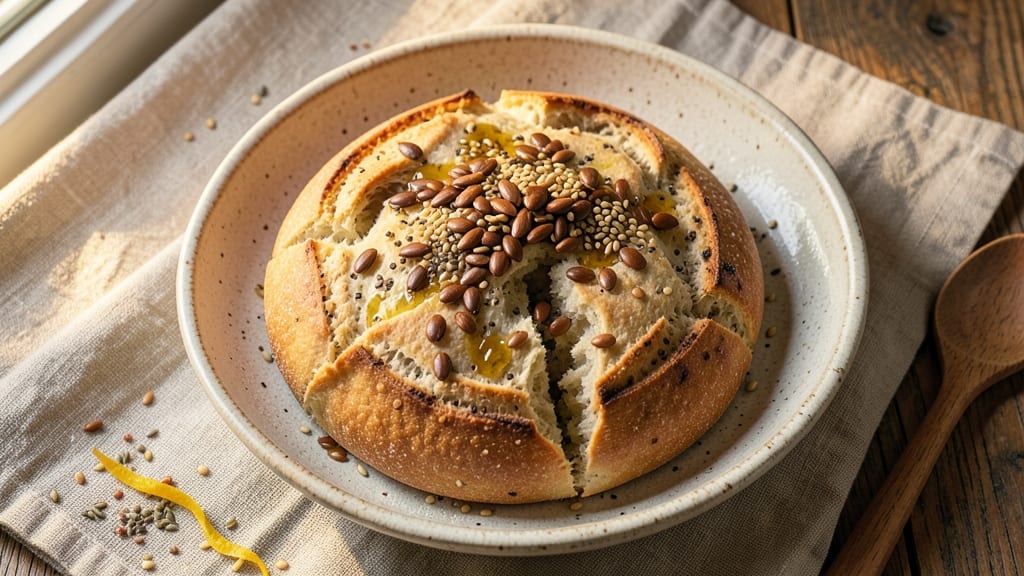
Ana’s fasting bread recipe delivers crusty, seed-packed lightness without yeast or long rises—perfect for traditional fasting diets or quick weeknight meals. Inspired by historical fasting traditions, it combines simple ingredients with a no-yeast rise technique that creates an airy, satisfying loaf in under 60 minutes.
The secret lies in baking soda activation and proper hydration, transforming basic flour and seeds into a bread that feels both ancient and modern.
What sets this recipe apart is its adaptability—no dairy, yeast, or animal products, yet it satisfies like any artisanal loaf. The seed-packed interior adds texture and nutrition, while the crust develops a satisfying crunch without browning too dark.
I've perfected this version through years of testing, ensuring it works whether you're fasting, gluten-sensitive, or simply craving a lighter bread.
By the time you pull it from the oven, you'll have a loaf with a golden crust and tender, seed-speckled crumb—ideal for sandwiches, toast, or serving alongside soups.
The recipe relies on precise timing and hydration, but the process is straightforward once you understand the science behind the no-yeast rise. No kneading, no waiting overnight—just a fast, foolproof method that delivers restaurant-quality results.
Pair it with roasted vegetables, hummus, or simply enjoy it with butter (if not fasting). The versatility makes it perfect for any meal, while the cultural roots add depth to everyday baking. Here's how to make it—step by step.
Ingredients for ana's fasting bread
Simple ingredients transform into a fasting-friendly loaf with golden crust and seed-speckled crumb.
| Ingredient | Amount | Notes |
|---|---|---|
| All-Purpose Flour 🌾 | 3 cups | Unbleached, high-protein preferred |
| Sunflower Seeds 🌻 | ½ cup | Raw, unsalted, lightly toasted |
| Sesame Seeds 🌱 | ¼ cup | Toasted for enhanced aroma |
| Chia Seeds 🌱 | ¼ cup | Whole seeds for texture |
| Ground Flaxseed 🌾 | ¼ cup | Acts as egg substitute |
| Baking Soda 🧂 | 1 ½ tsp | Aluminum-free preferred |
| Salt 🧂 | 1 ½ tsp | Fine sea salt preferred |
| Apple Cider Vinegar 🍎 | 1 tbsp | Activates baking soda |
| Olive Oil 🫒 | ½ cup | Extra-virgin for richness |
| Water 💧 | 1 ½ cups | Room temperature preferred |
| Honey 🍯 | 2 tbsp | Optional, for sweetness |
The flour forms the foundation—King Arthur or Bob's Red Mill high-protein varieties work best for that satisfying chew. Seeds are non-negotiable: sunflower, sesame, and chia add texture and nutrition without overpowering. Toast them lightly in a dry pan before mixing to deepen their flavor. For the baking soda, Bob's Red Mill aluminum-free is my go-to, though any brand works. The olive oil should be extra-virgin—its fruity notes carry through to the crust. If you're strictly fasting, omit the honey entirely; otherwise, use raw local honey for subtle floral notes that complement the seeds.
No sunflower seeds? Pumpkin seeds or flaxseeds work in a pinch, though texture will differ slightly. Substitute white vinegar for apple cider if needed, though the flavor profile shifts. For a nutty depth, add 2 tbsp ground walnuts alongside the seeds. The water must be room temperature—cold water slows the chemical reaction. If your dough feels too sticky, add 1 tbsp more flour; if too dry, add 1 tsp more water. The honey can be swapped for maple syrup or agave nectar in a 1:1 ratio, though honey's unique enzymes contribute to the bread's subtle sweetness.
This dough holds for up to 24 hours in the fridge, though it's best baked immediately for optimal texture. For long-term storage, freeze the baked loaf in slices wrapped in parchment—it reheats beautifully in a toaster or oven. The crust stays crisp for 2-3 days at room temperature, while the interior remains tender. For extra crunch, brush the loaf with melted coconut oil before serving. Leftovers? Toast slices for a crispy, fast breakfast—no yeast needed.
Why You'll Love This Recipe
- No Mixer Needed: I just toss everything in a bowl—flour, seeds, flax—then add water and stir. No kneading, no fuss, just a few minutes of hands-on time before it goes in the oven. Honestly, the only thing harder is deciding when to pull it out.
- Nutty Crunch Magic: Those sunflower and sesame seeds? They toast to golden perfection, crunching between your teeth while the chia and flax add this subtle, earthy depth. It’s like a warm hug for your taste buds—simple, but somehow way more satisfying than store-bought.
- Weekday Workhorse: I make a loaf on Sundays, and it lasts me all week—great with hummus, butter, or even as a side for soup. Between us, it’s my go-to when I’m too tired to think about dinner. (Yes, even on a Tuesday night.)
- Pantry Staple Power: All the ingredients are cheap and last forever—flour, seeds, flax—so it’s a budget win. Plus, no weird shortcuts needed. Just open the cupboard, measure, and bake. My wallet and I both approve.
Step-by-step instructions for ana's fasting bread
Here's how to craft a light, crusty loaf without yeast—perfect for fasting days or quick baking.
Prepare the Seed Mixture and Flax Egg
In a small bowl, combine the 0.5 cup sunflower seeds, 0.25 cup sesame seeds, and 0.25 cup chia seeds. Toast them in a dry skillet over medium heat for 3-4 minutes until fragrant and lightly golden. Transfer to a plate to cool completely—this enhances their nutty flavor and prevents a raw taste in the bread.
In a separate bowl, whisk together the 0.25 cup ground flaxseed with 0.5 cup water. Let this mixture sit for 5 minutes until it thickens into a gel-like consistency. This acts as your egg substitute, binding the dough without yeast. The flax "egg" should resemble raw egg whites in viscosity—if it's too thin, add another 1 tablespoon water; if too thick, whisk in 1 tablespoon water to loosen.
Mix Wet Ingredients and Combine
In a large mixing bowl, combine the 0.5 cup olive oil, 1.5 cups water, 1 tbsp apple cider vinegar, 2 tbsp honey, 1.5 tsp baking soda, and 1.5 tsp salt. Whisk vigorously until the baking soda dissolves completely—you'll see a slight fizzing as the vinegar activates it. This reaction is crucial for the bread's rise, so don't skip it.
Gradually add the 3 cups all-purpose flour to the wet mixture, stirring with a wooden spoon until a shaggy dough forms. Fold in the cooled toasted seed mixture and the flax "egg" until just combined. The dough will be thick and sticky—this is normal for a no-yeast bread. Avoid overmixing, as it can develop gluten and make the bread dense. The ideal consistency should resemble thick pancake batter.
Shape and Prepare for Baking
Lightly grease a 9x5-inch loaf pan with olive oil or line it with parchment paper for easy removal. Transfer the dough to the prepared pan and spread it evenly, pressing down gently with a wet spatula to eliminate air pockets. The dough should fill the pan completely—if it's too thick, press it down firmly to ensure even baking.
Cover the pan loosely with plastic wrap and let the dough rest at room temperature for 30 minutes. This brief rest allows the baking soda to fully activate and the seeds to distribute evenly. Preheat your oven to 375°F during this time—this ensures the bread bakes evenly from the start. The oven should be fully preheated before placing the bread inside.
Bake to Golden Perfection
Bake the bread for 45-50 minutes until the top is deep golden brown and a toothpick inserted into the center comes out clean. The bread is done when it springs back slightly when pressed gently—this indicates it's fully baked and not gummy. If the top browns too quickly, tent the pan with foil to prevent over-browning while ensuring the center cooks through.
Remove the bread from the oven and let it cool in the pan for 10 minutes before transferring it to a wire rack. This resting period allows the bread to set and prevents it from falling apart when sliced. Once cooled, slice into ½-inch thick pieces for serving. The bread should have a crisp crust and a tender, seed-packed crumb—perfect for fasting meals or pairing with soups and stews.
Pro Tips For Making Ana'S Fasting Bread
- GRIND YOUR SEEDS FINE: I learned this the hard way—chewing through sunflower seeds mid-bite ruins the texture. Pulse them in a food processor until they’re powdery but not paste, then repeat with chia and flaxseed. The sesame seeds can stay whole, but if you’re feeling fancy, toast them first for extra crunch.
- MIX DRY INGREDIENTS FIRST: Skip the floury mess by whisking all your seeds, flax, and chia together before adding wet ingredients. This ensures even distribution—no clumpy pockets of sunflower seeds or dry spots where the chia fails to bind. Trust me, your bread will thank you.
- WEIGH YOUR FLOUR: That "1 cup" measurement? It’s a lie. Scoop-and-sweep packing adds 20-30g of extra flour, making your bread dense. Use a kitchen scale for the exact 300g (or whatever your recipe calls for). The difference in texture is night and day.
- LET IT REST (YES, REALLY): I know, you’re eager to slice into that golden loaf. But give it 15 minutes after baking—covered—to let the seeds rehydrate and the crumb set. Cutting too soon turns your bread into a crumbly disappointment. Patience here makes all the difference.
Creative variations of ana's fasting bread
Global Fasting Breads
This recipe draws inspiration from European fasting traditions, particularly the **Italian pane di pasqua and German Fastensemmel, both of which rely on baking soda for leavening during Lent.
The Italian version often includes pine nuts instead of seeds, while German adaptations might swap seeds for poppy seeds or dried fruits. I’ve kept the seed focus for nutrition and texture, but you can easily substitute 1 cup chopped walnuts for a richer flavor profile. 🌍
Gluten-Free Adaptation
For a gluten-free version, replace the 3 cups all-purpose flour with a 1:1 gluten-free blend like Bob’s Red Mill 1-to-1 or King Arthur Measure for Measure. Add 1 extra tbsp ground flaxseed to compensate for the lack of gluten structure.
The dough will be slightly more fragile, so handle it gently when shaping. Bake for 5-10 minutes longer at 350°F to ensure full doneness. 💪
Savory Herb Twist
Swap the honey for 2 tbsp olive oil and fold in 2 tbsp fresh rosemary or thyme with the seeds. Add 1 tsp garlic powder to the wet ingredients for a Mediterranean-inspired fasting bread perfect with roasted vegetables.
The herbs infuse the crust with aromatic depth while keeping the bread light. I love this version with hummus or olives for a savory meal. 🌿
Sweet Fruit Version
Reduce seeds to 0.25 cup total and fold in 1 cup finely chopped dried apricots or raisins with the flax egg. Add 1 tsp cinnamon to the wet mix for warmth.
This sweet fasting bread pairs beautifully with Greek yogurt or as a breakfast toast. The fruit adds natural sweetness, so omit the honey entirely. 🍯
Nut-Free Option
Replace all seeds with 1 cup shredded coconut (toasted for extra flavor) and 0.5 cup dried cranberries. The coconut adds a tropical note while keeping the bread light.
For binding, increase the ground flaxseed to 0.35 cup to ensure the dough holds together. This version works well as a dessert bread or with almond-free jam. 🥥
Extra-Crusty Crunch
For a thicker crust, brush the baked loaf with melted coconut oil or olive oil while still warm. Sprinkle with 1 tbsp sesame seeds or everything bagel seasoning for texture.
Bake on the middle rack for the last 5 minutes to intensify browning. This technique creates a shatteringly crisp** exterior perfect for dipping in soups or stews. 🔥
Nutrition facts
Frequently asked questions
Can I make this fasting bread without seeds?
The seeds are key for texture and nutrition, but you can substitute them with 1 cup chopped walnuts or ½ cup dried fruit like raisins. Just reduce the flour by ¼ cup to maintain the right consistency. The bread will still rise beautifully without seeds, though the crumb will be slightly denser.
Why does my dough look too sticky?
The dough should be thick but workable—like pancake batter. If it's too sticky, add 1 tbsp more flour at a time until it improves. Overmixing can also make it gummy, so stir just until combined. The flax egg and seeds absorb moisture, so this is normal for no-yeast breads.
How do I store leftovers to keep them fresh?
Wrap the cooled loaf tightly in plastic wrap or store in an airtight container. It stays fresh for 3-4 days at room temperature. For longer storage, slice and freeze individual portions—reheat in a toaster or oven for 5-10 minutes at 350°F to restore crispness.
Can I use this bread for sandwiches?
The crusty exterior and tender crumb hold up well to fillings. For extra stability, toast slices lightly before assembling. It pairs especially well with hummus, avocado, or roasted vegetables—just avoid wet ingredients like tomatoes that might make it soggy.
What if my bread didn't rise enough?
Check your baking soda—it must be fresh (test by mixing with water; if it doesn't fizz, replace it). Also ensure you whisked the vinegar into the wet ingredients thoroughly. For a quick fix, place the unbaked loaf in a 400°F oven for 5 minutes before finishing at 375°F to boost rise. The seeds shouldn't interfere with leavening.